Key takeaways
- The first visit is an exam, not a drive-through: a history of what happened, an exam of how the neck and back move, findings, and a written plan before you leave.
- Bring a timeline, your symptom list, any imaging or ER paperwork you already have, and your ID and coverage cards. If you already have an attorney, bring their contact so records can be sent where they need to go.
- Say the word crash on the phone if it was a crash, and ask for an exam this week. All three offices close from 12 to 2.
- Ask four things: what did you find, what is the plan, when should I expect change, and what would make you send me somewhere else.
People put off the first visit for a reason that has nothing to do with pain. They do not know what it is. Is it a sales pitch, a ten-minute adjustment, a stack of forms? This chapter is the plain answer, drawn from what Missouri Injury Clinic publishes about its auto injury lane: diagnosis and a treatment plan after a crash. The same shape applies to a back that gave out on a job.
The phone call
There is no referral requirement. You call the office you can drive to this week. For south city and south county, that is the Tesson Ferry office, (314) 530-5480. Hazelwood covers north county at (314) 627-1411. O'Fallon covers the St. Charles side at (636) 280-0990. Tesson Ferry and Hazelwood run Monday through Thursday 9 to 6 and Friday 9 to 12. O'Fallon runs Monday, Tuesday, and Thursday 9 to 6, with Wednesday and Friday by appointment. All three are closed from 12 to 2 every day for meetings, so call in the morning.
Say what happened in one sentence: "I was rear-ended on Lindbergh on Saturday and my lower back has been bad since Monday." If your head was involved, say that too. If it was work rather than a crash, say that. The front desk needs the shape of the problem, not the whole story.
Ask the clinic directly how a visit is billed and what they accept. This guide does not publish payment terms for a clinic it does not own, and it will not describe an arrangement it cannot verify.
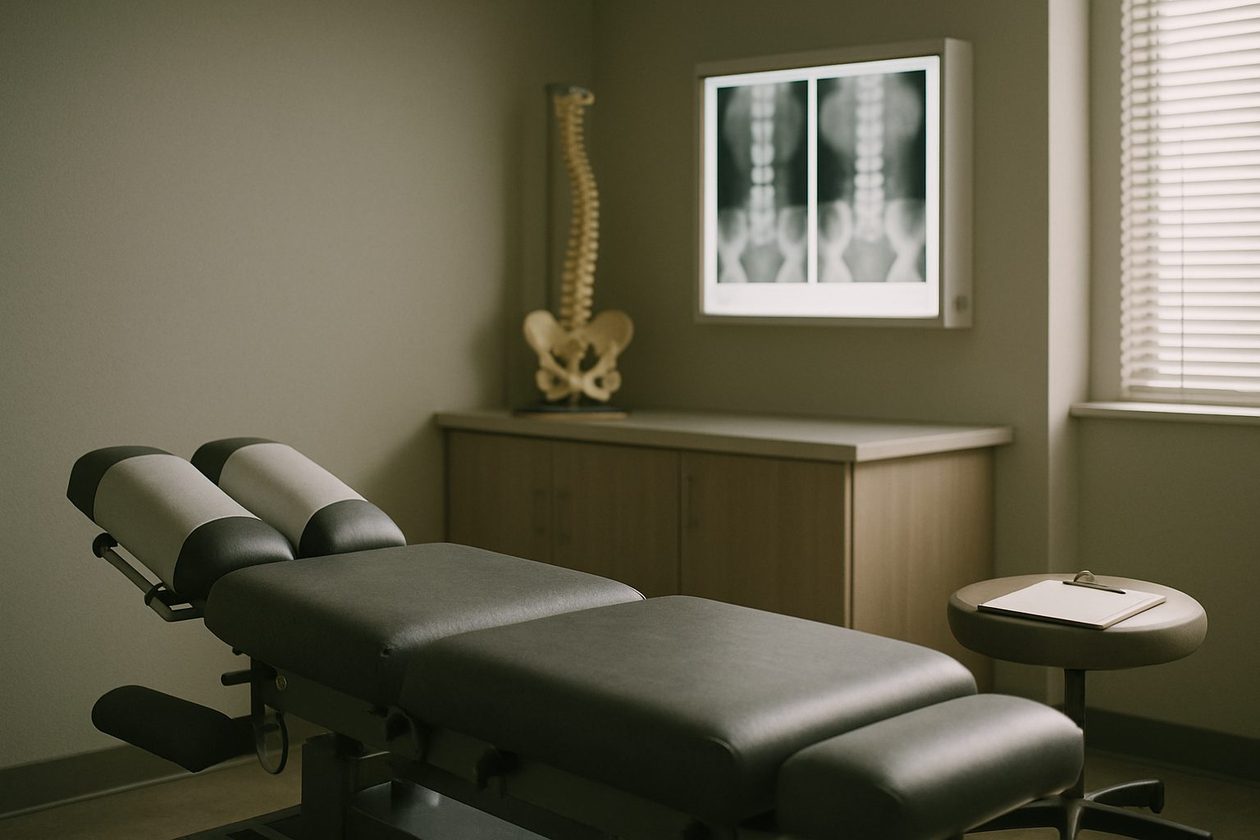
What the visit actually is
The history
Expect to be asked what happened, when, which direction the force came from, whether you were stopped or moving, whether you hit your head, what hurt that day and what hurts now, what makes it worse, what you have tried, and what your back was like before. Bring your timeline so you do not have to reconstruct it under fluorescent light. The history is not small talk. It is how the clinician decides which tests to run.
The exam
A hands-on movement and symptom exam: range of motion, where it catches, which movements reproduce the pain, reflexes, strength, sensation down the legs, palpation along the spine and the muscles beside it. If something in the findings calls for imaging, a referral, or a different specialty, a good clinician says so, and that is the visit working as designed.
The findings and the plan
You should leave knowing what the exam found, what the working diagnosis is if the findings support one, and what the clinic proposes to do about it on what schedule. That is the written plan. Ask for it in words you can repeat out loud to someone at home. The plan is yours. It is also the first entry in your record, which has its own chapter.
What to bring
- A timeline. Date, time, road, direction, stopped or moving, belted or not, what hurt that day, what hurt on day two. Phone notes are fine.
- A symptom list. The motions that bite, the time of day it is worst, anything that travels into a leg or up the neck, headaches, fog, dizziness.
- Paperwork you already have. ER discharge papers, imaging reports, a police report number if there is one. Not required, but useful.
- Your medication list. Including what you have been taking for the pain and how much.
- ID and coverage cards. Ask the front desk what else they need when you call.
- Your attorney's contact, if you already have one, so records can be sent where they need to go. If you do not have one, nothing changes.
What to say, and what not to worry about
Say everything that hurts, not just the loudest thing. People lead with the lower back and forget to mention the headache, the jaw, the shoulder the belt caught. A clinician can only examine what you report. If a symptom feels minor or embarrassing, say it anyway. Numbness, bladder changes, and leg weakness are not minor and should already have sent you to the emergency department; see ER or clinic.
Do not worry about sounding dramatic. Delayed soft-tissue pain after a crash is the standard pattern, not a surprise, and the clinic sees it every week. Do not worry about having "decided" anything. You do not need to have decided anything about a claim before you get examined. The exam happens because you are hurt. Everything else follows from honest care, not the other way around.
The bright line
An injury clinic is built for planned care. Chest pain, a sudden severe headache, weakness or numbness on one side, trouble speaking, a loss of bowel or bladder control, or a head injury with vomiting or worsening confusion is an emergency room trip right now, not a call to a clinic. If the clinic hears something on the phone that belongs in an emergency department, and sends you there instead of booking you, that is the system working, not a wasted call.
After the first visit
Follow the plan and keep the appointments in it. Keep your own notes too: what changed, what did not, and when. If the plan includes a concussion lane alongside the back work, the clinic names its tools publicly: vagus nerve stimulation, neurofeedback, Alpha Stim, sensory motor integration, exercise with oxygen, oculomotor rehab, and cognitive rehabilitation. If your back is a work back rather than a crash back, the work chapter covers what to tell the clinic about the job.
Featured clinic · Missouri Injury Clinic
The shortest path from sore to seen is a morning phone call.
Plan for a full exam: history, testing, findings, and a written plan. It is a real appointment, not a drive-through. Say crash if it was a crash.
Advertising. This guide is compensated for featuring Missouri Injury Clinic. Joseph L. Hollingsworth, DC, is a chiropractor, not a lawyer. Hours are worth confirming on the call.