Key takeaways
- Keep moving gently. Complete bed rest makes most soft-tissue back pain worse; short walks and frequent position changes help.
- Sleep side-lying with a pillow between the knees, or on your back with one under them. Getting out of bed is a log roll, not a sit-up.
- Driving: seat a notch more upright, lumbar support or a rolled towel, mirrors set so you turn less, and breaks on anything over half an hour.
- Write down what hurts, when, and what makes it worse. That list is the most useful thing you will bring to the exam.
You called in the morning, you have an appointment, and there are three or four days between now and it. This chapter is what to do with those days. It is practical, general, and not medical advice; your clinician's instructions, once you have them, replace everything here. Until then, the goal is simple: do not make it worse, and show up with a good list.
Moving
The old advice was bed rest. The standard guidance for years now has been the opposite: stay as active as you comfortably can. The National Institutes of Health describes the general approach in its back pain overview at niams.nih.gov, and the shape of it is this. Short walks, several a day, on flat ground. Stand up at least every half hour if you sit for work. Avoid the two or three specific motions that really bite, usually bending and twisting at the same time, lifting with a rounded back, or a long stretch of sitting. Do not push into sharp pain to prove a point, and do not lie flat for three days to avoid it.
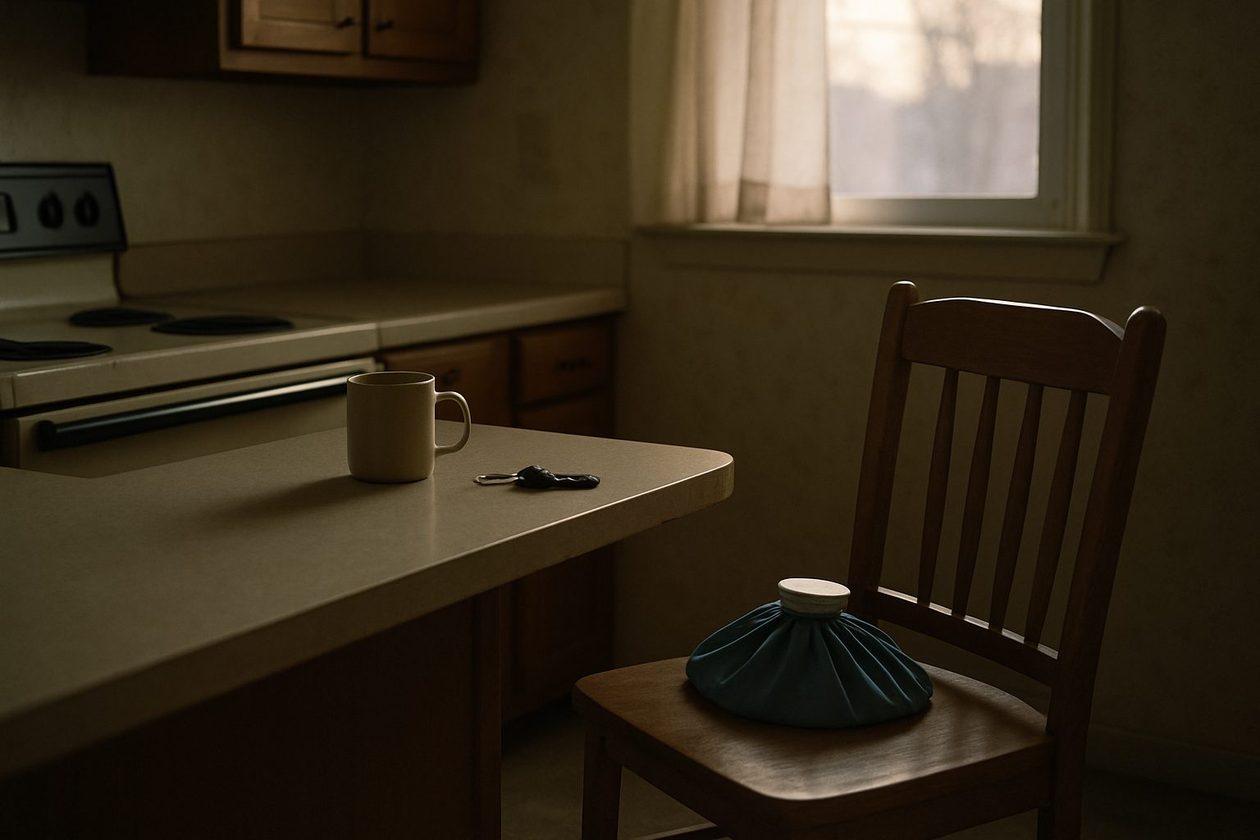
Ice or heat is mostly a comfort choice. The common pattern is cold in the first day or two, heat after that. Fifteen to twenty minutes, something between your skin and the pack, and stop if it makes things worse.
Sitting
Sitting loads a lower back more than standing does, which is why the drive and the desk are where a day-two back complains loudest. Sit back in the chair with your hips all the way in, a small roll or cushion in the curve of your lower back, feet flat, knees at about hip height. A kitchen chair is usually better than a couch. If you work at a desk, the half-hour rule applies: stand, walk to the far end of the office, come back.
Getting up from a chair: scoot to the edge, feet under you, lean forward from the hips with a straight back, and push up with your legs. Getting up by hinging at the waist is the motion that catches.
Sleeping
Side-lying with a pillow between the knees keeps the hips and lower back stacked. On your back, a pillow under the knees takes the arch out of the lumbar spine. Stomach sleeping is the one most people with a sore back regret in the morning. A firmer surface generally helps; if your mattress is very soft, a few nights on the floor on a folded comforter is a real option, not a joke.
Getting out of bed is the motion that hurts most on day two. Do it as a log roll: knees bent, roll onto your side as one unit, drop your feet off the edge, and push up to sitting with your arms while your legs swing down. Sit for a breath before standing. Sitting straight up from flat is a sit-up, and your back will tell you so.
Driving
Most readers have to keep driving, on the same roads where the crash happened. A few adjustments help. Bring the seat back a notch more upright than usual so your hips and shoulders are stacked. Put a small lumbar cushion or a rolled towel in the curve of your lower back. Move the seat forward enough that your knees are slightly bent with the pedal fully down, so you are not reaching with your leg. Set the mirrors so you turn your head and trunk as little as possible to check them; the blind-spot twist is a common day-two catch.
On anything over half an hour, which on I-270 at 5 p.m. is most trips, plan a stop to stand and walk for a minute. Wear the belt. Always wear the belt. The National Highway Traffic Safety Administration makes the case at nhtsa.gov, and the back you are nursing is sore in part because the belt did its job instead of letting you hit the windshield.
Working
If your job is the reason your back is sore, or if it will be what makes it worse in the next three days, the honest move is to tell whoever needs to know that you have an exam scheduled and ask for the lighter tasks until then. A loading dock, a hospital floor, a roof, and a truck cab all have their own rules, and the work chapter goes into them.
What to write down
- The timeline. When it happened, where, what you were doing, how you felt that day and the next morning.
- The map of it. Where it hurts, in plain words. Low and to the right. Across the belt line. Into the left buttock. Down the back of the thigh to the knee.
- The motions that bite. Getting out of the car. The first ten steps. Turning to check a blind spot. Sneezing. Putting on socks.
- The clock. Worst in the morning? Worse as the day goes on? Waking you at night?
- Anything that is not your back. Headache, fog, dizziness, jaw, shoulder, neck, tingling anywhere. Say it all; the clinician can only examine what you report.
- What you have taken. Medication, dose, how often, and whether it helped.
The red flags, every day of the week between
The bright line does not pause because you have an appointment on Thursday. Chest pain, a sudden severe headache, weakness or numbness on one side, trouble speaking, a loss of bowel or bladder control, or a head injury with vomiting or worsening confusion is an emergency room trip right now, not a call to a clinic. New numbness between the legs, new bladder or bowel changes, a leg that goes weak, or a back that will not let you stand: those go to an emergency department the night they show up. ER or clinic has the full list.
Featured clinic · Missouri Injury Clinic
Show up with the list, and let someone examine you.
The days between the injury and the exam are for not making it worse. The exam is for finding out what it is. Pick the office you can drive to and keep the appointment.
Advertising. This guide is compensated for featuring Missouri Injury Clinic. Joseph L. Hollingsworth, DC, is a chiropractor, not a lawyer. Hours are worth confirming on the call.